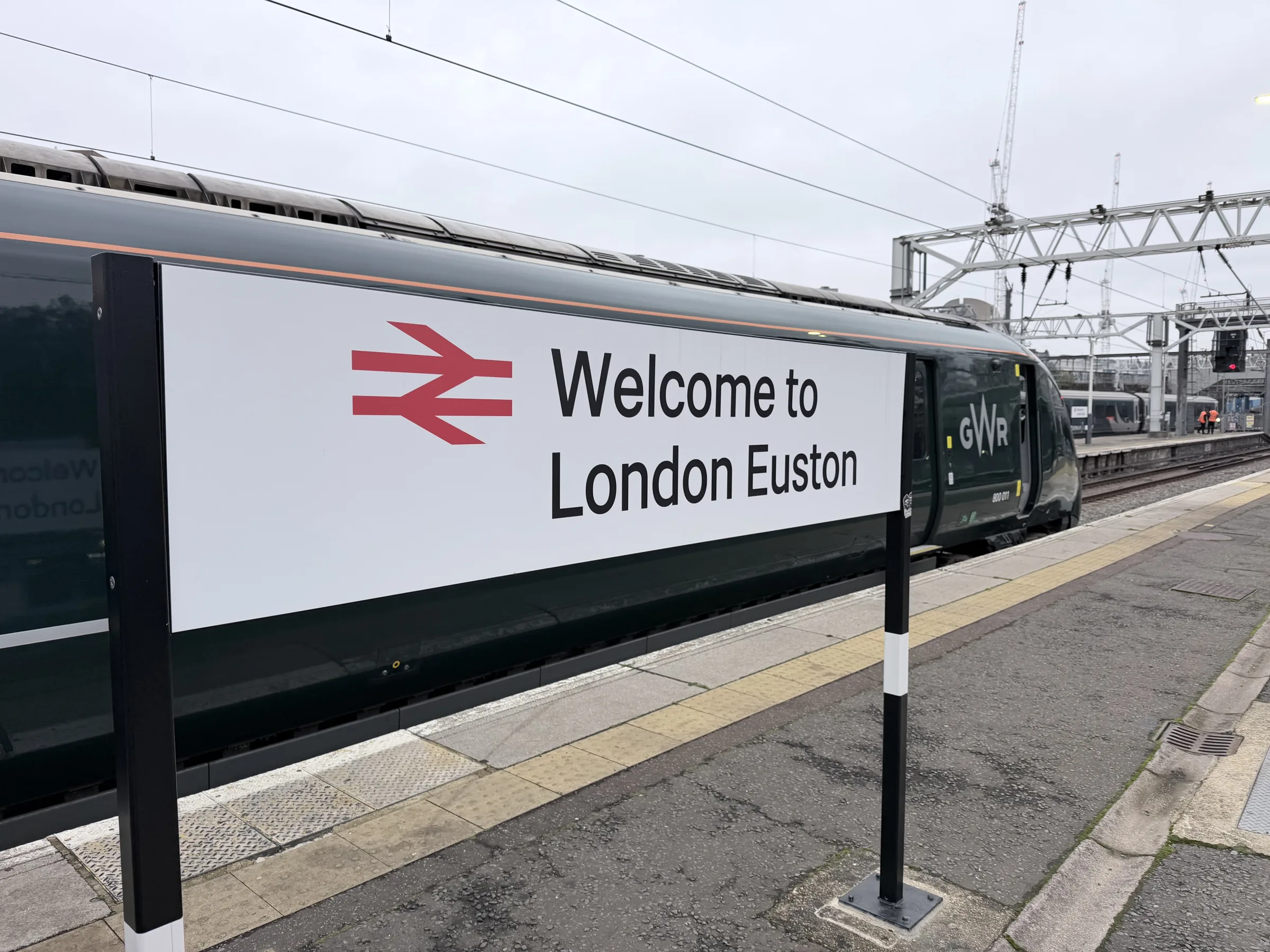
By Mike Newman
I'm not used to it anymore. Appearing on a platform on a freezing November morning with nothing planned other than the journey itself. This was a way of life once. A necessary escape from the endlessly bewildering, belittling weeks in Local Government. The planning, the anticipation of the railway system working flawlessly - or not. I've compared it to fishing - heading out in the hope of travelling on a specific route, not quite knowing that you'd be successful. It was a hobby that brought me many days of relaxing travel, an opportunity to see much of the country - and a lot of ridicule. But, life has changed.
The announcement that Great Western Railways would be running their IETs into London Euston was made some time back. I'd read with interest about the driver training runs, the complexity of timing additional express services on the souther tail of the West Coast Mainline, and of the need to prime passengers for delay and inconvenience. As I joined the crowd at Bristol Parkway station, it was pretty clear that this last part hadn't gone to plan - there was widespread confusion about the destination, the timing, and the additional journey length. GWR staff milled around handing out free sweets and answering questions, but many people avoided them, glared at the screens and chuntered to each that they "couldn't see any trains to Paddington". One chap was loudly grousing about not knowing what was happening while standing amusingly close to a "NO TRAINS TO PADDINGTON THIS WEEKEND" poster. I hunkered down for a frustrating wait.
Eventually a pair of five-car Class 800s purred into the station just a few minutes behind schedule. They were already busy, and given a failure in the seat reservation system, soon turned into a mobile bout of wrestling. Sought a seat in the moderately more dignified First Class section, which was also very busy - and settled in for the ride. When I used to do this regularly, I'd head out on the earliest possible train - to maximise my time on the rails and the potential for travel, but also to be well into the journey before the leisure travellers were up and about. Commuters can be annoying - but they know the rules, know where to stand, when to wait for a later train, when the give up on a lost cause. Leisure travellers who do this just a few times each year have none of that resignation and stoicism. They grumble, march around like there's been some sort of crime committed when someone takes their seat, and regard any moderate change to their journey as "ridiculous". But, I was on board - a stop at Swindon to cram more angry punters onboard, and the calling points stops were Oxford and Milton Keynes - but operationally only, the doors wouldn't unlock. The diversion had begun.
Peeling off the mainline at Foxhall Junction wasn't the rarity it once was - as the Bristol to Oxford service which recently began operating again after a good few years absence now covered this multiple times each day. But it had been a while for me, and the crawl through the rapidly changing environs of Oxford Station was surprising - a lot had happened, even since my relatively recent passage on route from Worcester to London a month or two ago. After Oxford, we took the line towards Bicester Village - on my last passage this had been Bicester Town, before the chord to facilitate Oxford to Marylebone trains had been built. The former Varsity Line which connected Oxford and Cambridge has had a chequered history - a strong strategic case for reopening saw the East West Rail project finally deliver a newly fettled line to Bletchley with a new high-level station and an intermediate stop at Winslow in 2024, but industrial action around the ever-emotive subject of driver only operation means that the line had yet to see a passenger train in service.
Until today. These diversions, quite apart from showing the strategic possibility in the East West line for network resilience, showed the great folly in disconnecting the Great Western and West Coast lines. From their surprisingly close origins in London they fan out slowly, as we crept rather slowly east towards Bletchley it was interesting to imagine how a passenger service here would change the connections. The radial prejudice as I've previously called it - that tendency to build routes out from London, but to leave valleys of unserved space between them, was in play here too. We snaked through Bletchley High Level - pristine, new and unusued, and curved alongside the West Coast Mainline for the short trip to reverse at Milton Keynes Central. Again, a station with a storied history for me - but no opportunity, or any great desire to explore today - a swift reversal then a cruise into London Euston.
As I tramped the length of Platform 15 towards the concourse, seething with shoppers and travellers heading back to points north, I reflected. I did this kind of thing so rarely now - and I missed it. I didn't miss fighting for a space in a coffee queue, or the icy chill of Bristol Parkway station earlier today. Travel had changed too - I'd spent the day checking in on my journey with an AI assistant built for this purpose. It had kept tabs on my connections, mapped out alternatives and chased the progress of the train towards London. You could view that as taking the romance and chance out of the enterprise, but for a somewhat anxious traveller who didn't know quite how things worked anymore, it was a godsend.
I boarded the return service, more GWR employees plying passengers with sweets as we made our way along the train. In just a few weeks, GWR would be no more as a private concern - being absorbed into the troubling familiar sounding Great British Railways. I thought back to the last few public trains in 1996, not imagining I'd be experiencing the reversal of the Railways Act three decades later. Whatever the wisdom of privatisation - and I suspect I appreciate more of it now than I did back then - we're entering a new era. As the train reversed south to retrace its steps along the East West Rail line, I wondered if some of the challenges of the old regime weren't still with us?
Movebook6 journeys · 384.47 miles on this date
| Time | Journey | Headcode | Operator | Stock | Miles |
|---|---|---|---|---|---|
| 07:49 | BridgwaterBristol Temple Meads | 2K16 | 34.14 | ||
| 09:12 +1 delay | Bristol Temple MeadsBristol Parkway | 2V54 | 5.85 | ||
| 09:56 +3 delay | Bristol ParkwayLondon Euston | 1Z38 | 152.25 | ||
| 14:36 +5 delay | London EustonBristol Parkway | 1Z45 | 152.25 | ||
| 16:58 +11 delay | Bristol ParkwayBristol Temple Meads | 1V59 | 5.85 | ||
| 17:55 | Bristol Temple MeadsBridgwater | 2C85 | 34.14 |


Atlas Perditus
View this place in Atlas PerditusNearby stories
- John Cale (2018-1964): A Futurespective, The Barbican3.2 km
- London Rediscovered: Paddington3.3 km
- Throwing A Dead Rat At The Curtains: A Prelude To Flight3.8 km
Within 10 km, measured in a straight line between mapped points or route centres.
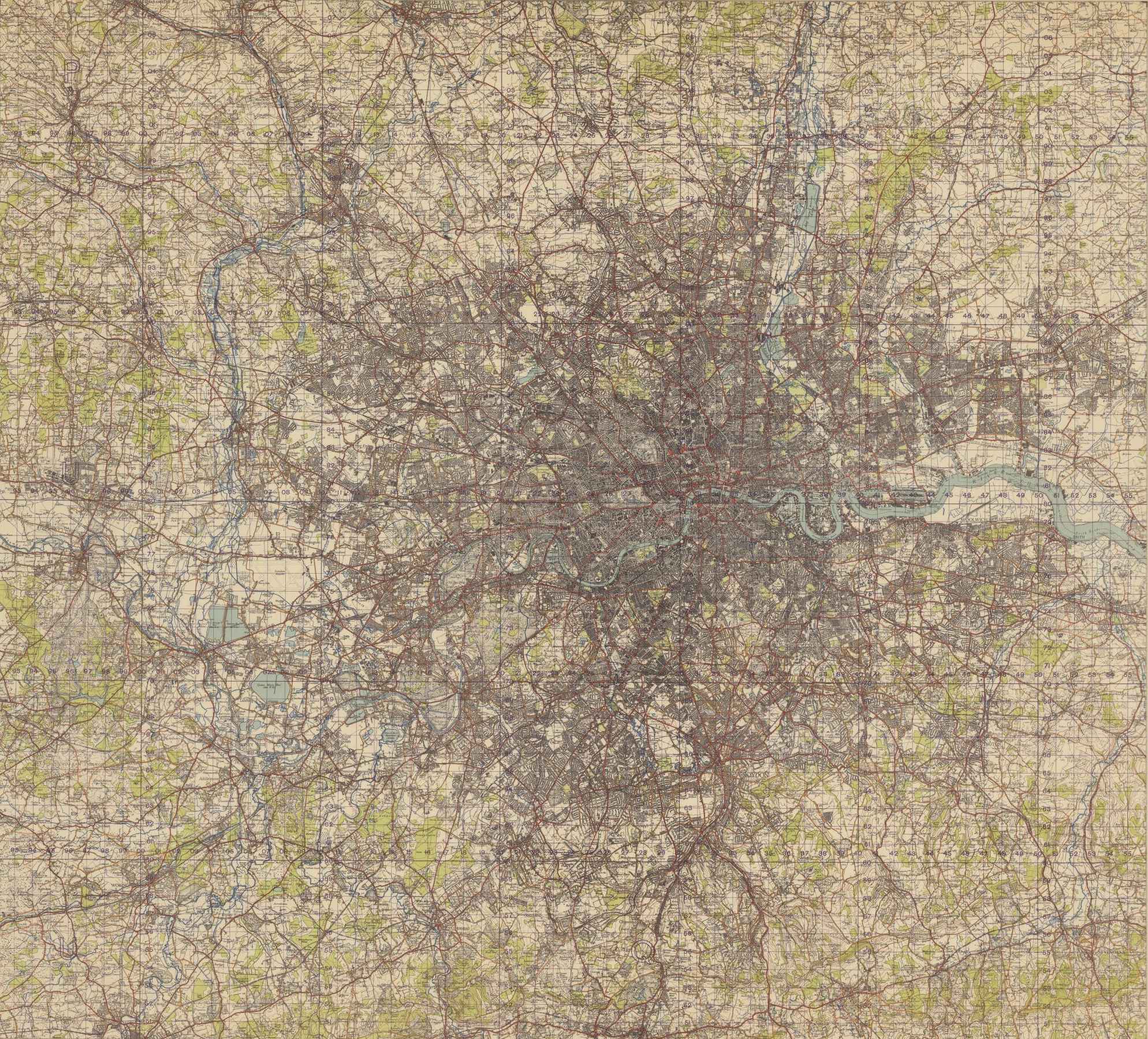
London, 1951 · map around this story (approximate)
Reproduced with the permission of the National Library of Scotland